Try GRASS online
There are several ways to try GRASS in your browser without installing it locally, either with Binder or rollApp. If you’re comfortable scripting in Python, start with Binder; for a point-and-click interface, choose rollApp. Trying GRASS online is a great way to get a quick feel for what it can do, but the full experience—including add-ons, your own data, and the best performance—comes with a local install.
Try GRASS in your browser with Jupyter notebooks
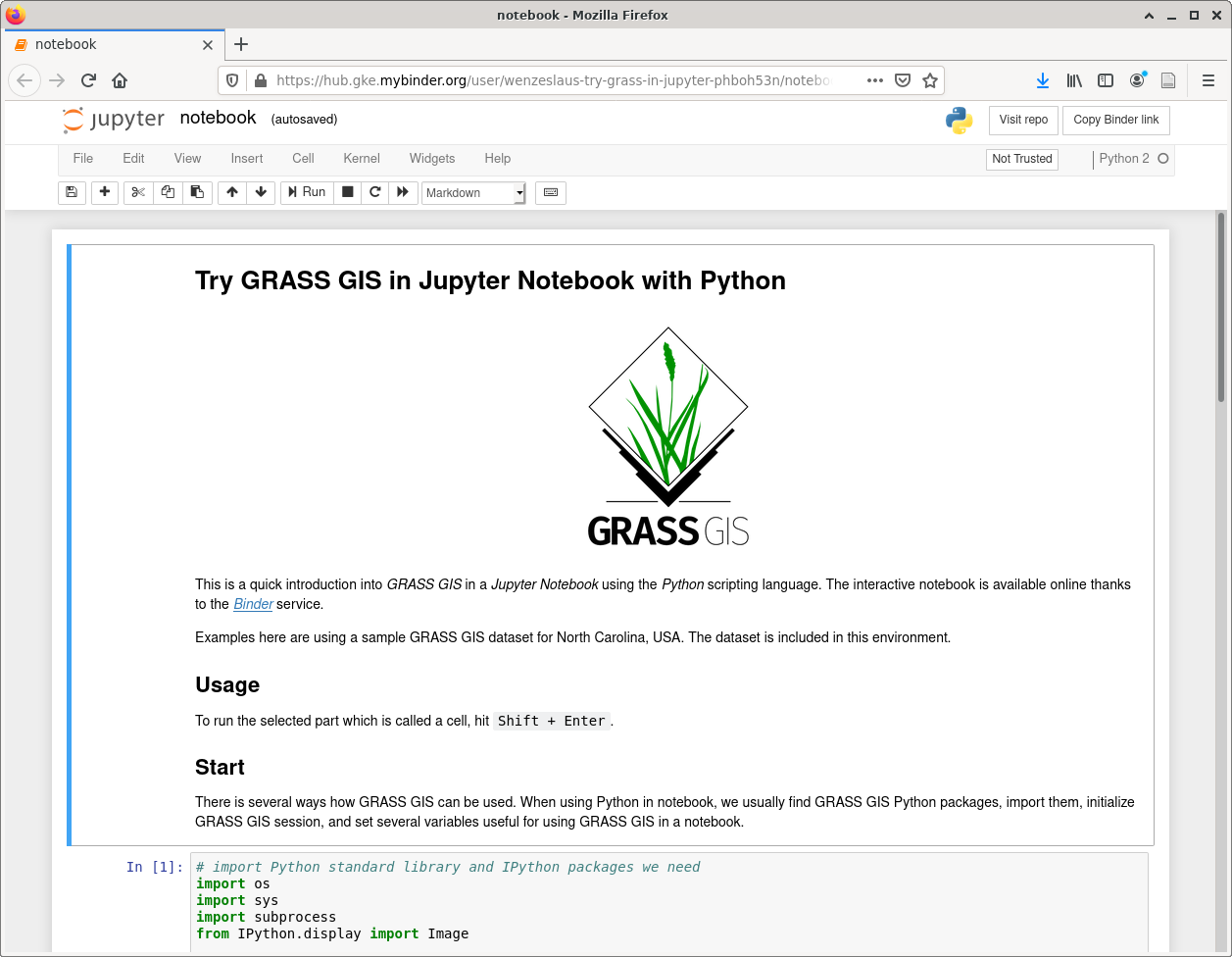
Drive GRASS through Python notebooks in your browser, with no installation, no account, and no setup required. In notebooks, you use the GRASS Python API alongside other scientific Python libraries, and the notebooks from the official GRASS repository are ready to launch on Binder for quick prototyping and sharing. Binder hosts a fresh, temporary environment for each session and resets when you’re done; sessions are short-lived and have limited compute, so they’re best for trying things out and sharing demos.
Start the GRASS tutorial on Binder
Other example notebooks on Binder: buffer analysis, hydrology, viewshed analysis, solar potential.
Try GRASS as rollApp
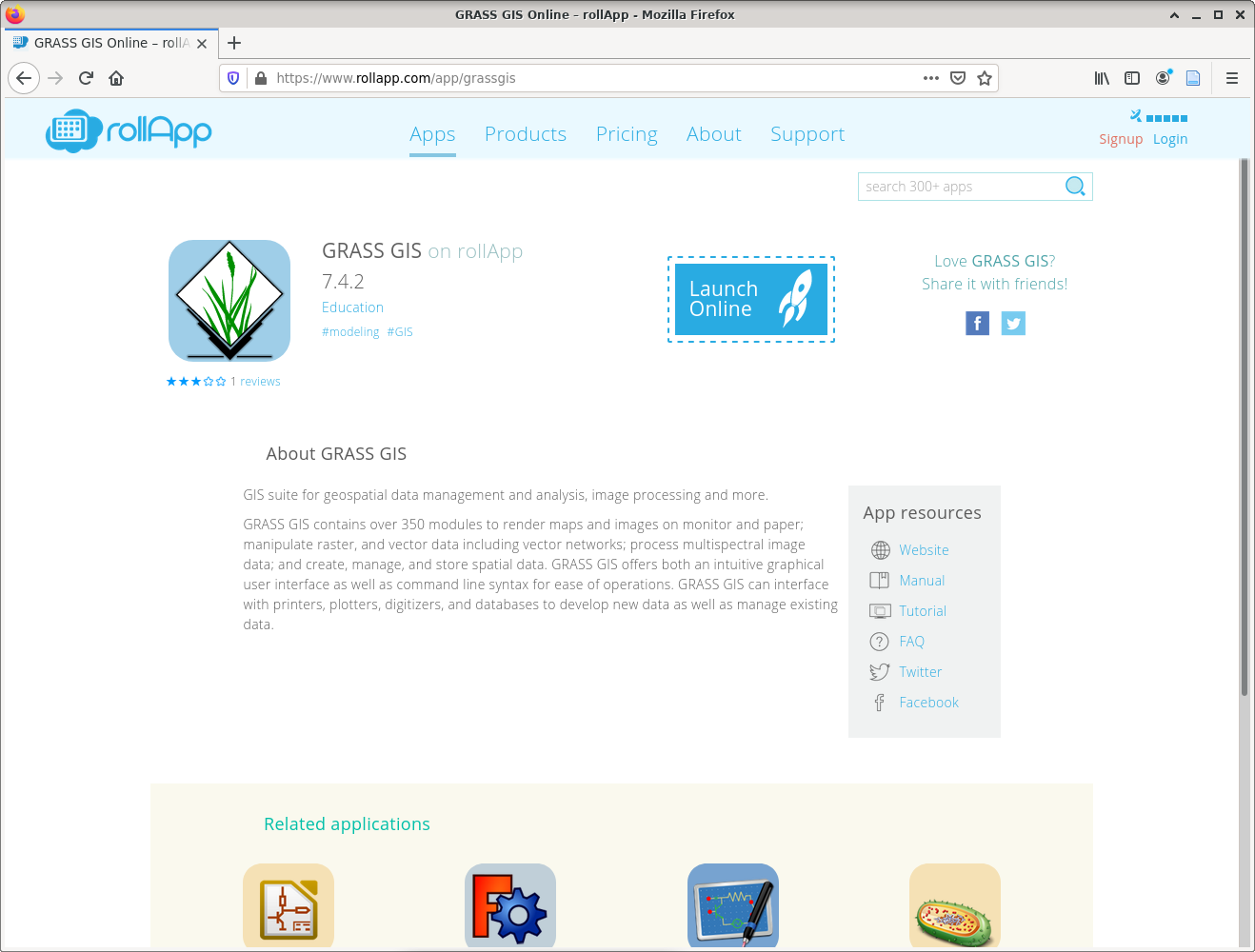
Use the full GRASS desktop interface in your browser through rollApp, a cloud platform that runs native applications online. You can connect a rollApp session to cloud storage like Google Drive, Dropbox, OneDrive, or Box for loading and saving data.
You have to register (which is free) to launch a rollApp, and only minimal compute resources are available in the free tier. rollApp currently runs GRASS 8.2. The GRASS project does not control when rollApp upgrades to a newer version.